What to Expect at Your First Remedial Massage Appointment
How booking, intake, consent and treatment work at my North Beach home clinic—and how to stay comfortable throughout.
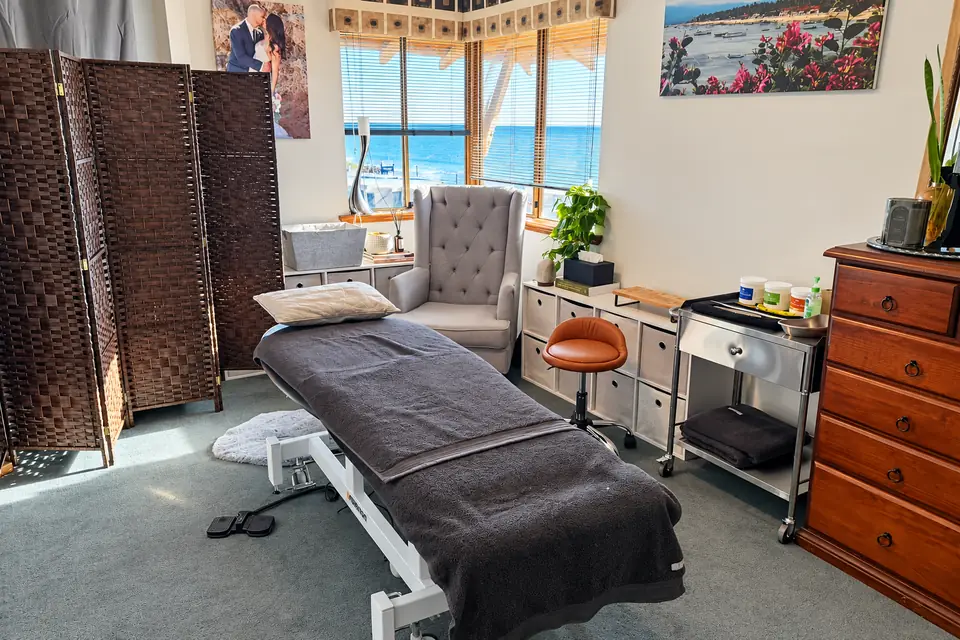
If you haven’t had remedial massage before, it’s normal to have questions. What do you book? Do you need to know which muscle is causing the problem? How much pressure should you put up with?
You don’t need all the answers before you arrive. I want you to understand what we’re doing, feel comfortable asking questions and have a say in your treatment. Here’s what to expect from a first remedial massage appointment with me at Strong By Rucci.
Start by choosing an appointment length
On my remedial massage page, you book by time. There are 30, 60 and 90-minute massage appointments. I suggest 60 minutes for most first visits so we have time to talk and work on more than one area.
A shorter targeted appointment may suit a specific concern. The separate 15-minute dry-needling option is for one specific area where appropriate; it isn’t the default choice for a new client who needs a broader assessment. If you’re unsure, message me before booking and I’ll help you choose.
The Reset Series is an optional focus within a standard 60-minute massage. You can mention Desk, Performance, Back or Tradie Reset if one sounds relevant, or leave that decision until we’ve spoken. There’s no extra treatment menu to work through.
You’re coming to a home clinic in North Beach
My treatment room is a home clinic in North Beach, Perth, with gorgeous ocean views. You’ll receive the full address and appointment details when you book.
Use those details to plan your visit, and contact me if anything is unclear. Don’t assume a facility or access arrangement that hasn’t been confirmed; if you have access needs or questions about attending, let me know before the appointment so we can discuss them.
Complete your intake information honestly
You’ll be asked to complete an intake form. It helps me understand why you’re booking, where you’d like attention, your relevant history and what you hope to get from treatment.
You don’t need to write a medical essay or name the exact muscle. “My shoulder feels uncomfortable when I reach overhead, and it started last week” is useful information. Mention how long it has been happening, what makes it better or worse, and whether you have already seen another practitioner.
If you aren’t sure how to answer something, ask. Tell me about changes since completing the form as well; written information starts the conversation rather than replacing it.
We’ll talk about your goals and relevant history
At the appointment, I’ll ask what brings you in, the areas you’d like me to focus on and your pressure preferences. We’ll discuss relevant health information and what is appropriate for that day.
For example, tell me about recent injuries or operations, medicines that affect bleeding or sensation, skin problems in the treatment area, and any advice you’ve received about hands-on treatment. Don’t stop medication to prepare for a massage; bring the information so treatment can be considered appropriately.
A condition doesn’t automatically mean you can never have massage. It may mean adapting the approach, avoiding an area, asking for further information or postponing treatment. The NCCIH safety guidance notes that some people are more vulnerable to adverse effects, and that massage should not delay medical care. 1
Assessment, consent and treatment share the booked time
Your appointment includes an appropriate assessment, discussion and consent, treatment and reassessment. The whole booked time isn’t necessarily hands-on massage, especially when there is important information to work through at a first visit.
I’ll explain the proposed focus and check that you’re comfortable with it. Ask which areas are involved, what the technique is intended to do and how positioning, clothing and covering will be managed. You can choose not to have an area treated or ask for a different approach.
Where appropriate, treatment may include remedial massage, myofascial techniques, trigger point work or mobility techniques. Dry needling is only considered where clinically indicated, within my scope and with your specific consent. It isn’t something you have to accept to receive a worthwhile appointment.
You don’t need to endure excessive pressure
Pressure is something we agree on and adjust. If you find yourself holding your breath, tensing up or waiting for a technique to end, tell me. You can use plain language: “less pressure”, “that feels sharp”, “can we change position?” or “please stop”.
I’ll check in as we go, but I can’t know exactly how something feels to you unless you tell me. A preference at the beginning doesn’t commit you to the same pressure for the whole session.
Remedial massage isn’t a toughness test. If you’d prefer a gentler session or more of a relaxation focus, we can discuss that. This comparison of remedial and relaxation massage explains how those priorities can overlap.
What happens at the end?
We’ll review how you’re feeling and what you noticed. That might include discussing the original concern or checking a movement again where relevant. Tell me if anything feels worse or if you’re unsure about your response.
Any suggestions should fit what we’ve discussed, rather than a generic list of things everyone must do after massage. I may suggest monitoring your response or seeking another professional’s input when that is the appropriate next step.
There’s no obligation to book a package or commit to a regular treatment schedule. We can talk about whether another visit makes sense, but the decision remains yours.
Will you be sore afterwards?
Some people experience temporary tenderness after massage; others don’t. Neither response tells us by itself whether the treatment was successful. A Cochrane review of massage for low-back pain reported increased pain as an adverse effect in some study participants, so discomfort shouldn’t be treated as proof that something beneficial has happened. 2
Let me know if your response concerns you so we can review the treatment. Don’t assume worsening symptoms are something you must simply tolerate. Get medical advice for severe, unusual, persistent or worsening symptoms rather than waiting for your next massage.
Seek urgent medical help for back pain with loss of feeling or movement in your limbs, or new problems controlling your bladder or bowels. Healthdirect identifies these as emergency warning signs. 3 Massage is not the place to assess an emergency.
A simple preparation checklist
- Read the booking details and complete the intake information.
- Bring relevant information about injuries, medication, operations or advice from another practitioner.
- Think about the main thing you’d like help with, without feeling you need to diagnose it.
- Ask ahead about access needs or anything that would affect your comfort.
- Be ready to tell me what feels right and what doesn’t.
I hold a Diploma of Remedial Massage from Paramount College of Natural Health, where I received the Outstanding Achievement award. You can read more about my background, but the most useful thing I can do at your appointment is listen, explain and tailor the session to you.
References & further reading
- NCCIH. Massage Therapy: What You Need To Know—safety and precautions.
- Furlan et al. (2015). Massage for low-back pain. Cochrane review.
- Healthdirect. Low back pain—when to seek urgent medical help.
General educational information. Exercise examples and treatment discussions need to be adapted to the individual; they do not replace personal assessment or medical advice.
A treatment built around you.
Find out what’s available at my North Beach home clinic and choose an appointment that suits you.
Book a Remedial MassageKeep reading.
 Illustration
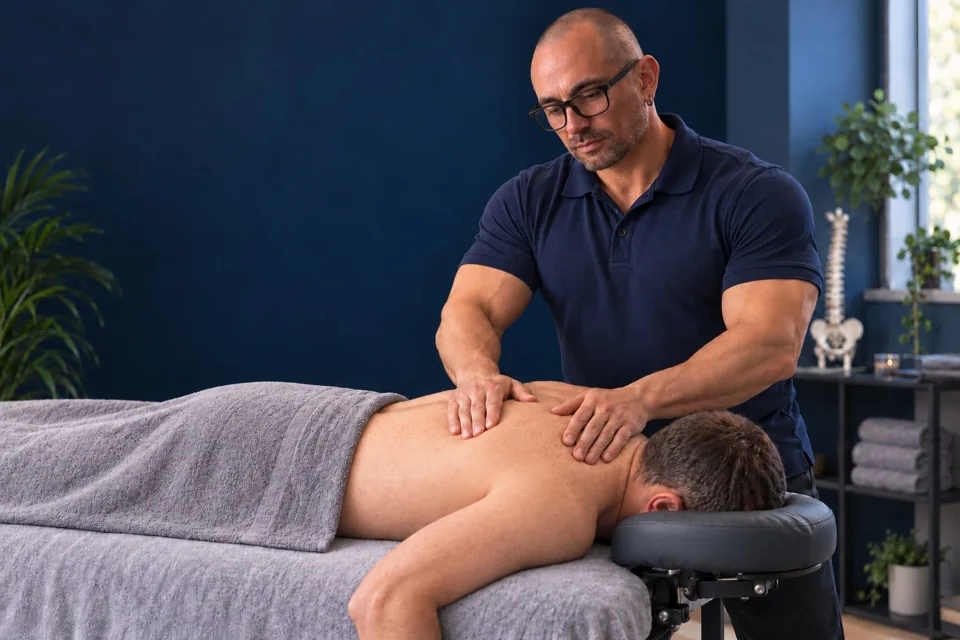
Remedial Massage vs Relaxation Massage: What's the Difference?
Understand the purpose, pressure and expectations of each approach so you can choose a session that suits you.
Returning to the Gym After 10 Years: Where Do You Start?
Leave your old personal bests in the past and build a return that fits work, family and the life you have now.